|
Tired of crappie
sounding PA cabinets?
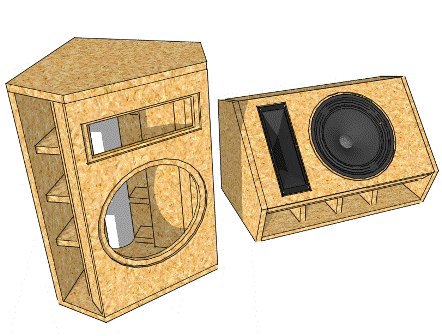
This Decware original Ultra-flex design represents the most efficient cabinet you can build for a single 12 inch woofer. In fact most drivers see better power handling and improved linearity in this box. We love it because of it's low distortion, good tone, and incredible speed. They deliver a chest hit that you are sure to remember.
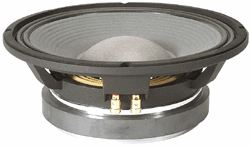
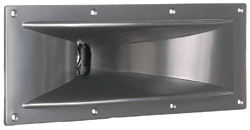
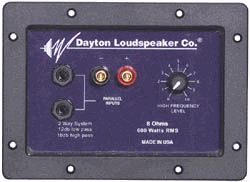
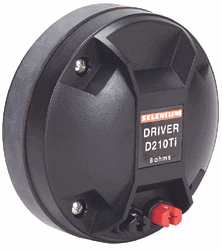
These can be used as mains for a PA, or flipped on their side and used as stage monitors. Use your favorite 12 inch pro audio driver and a 4 1/2 x 12 inch compression horn with a decent crossover network.
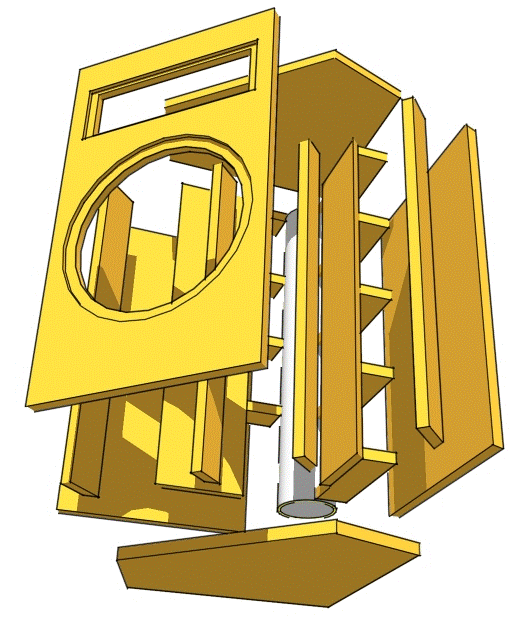
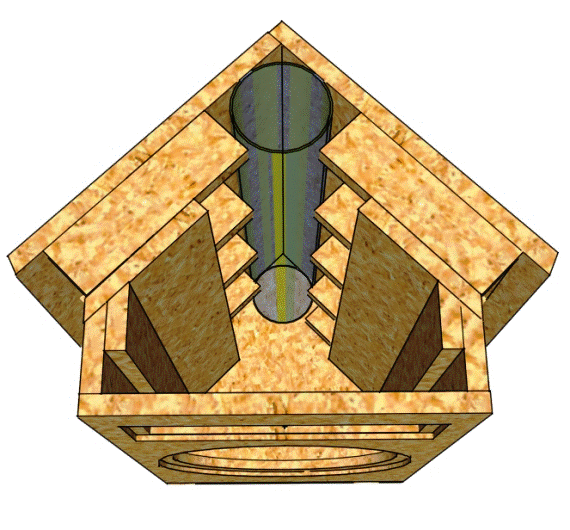
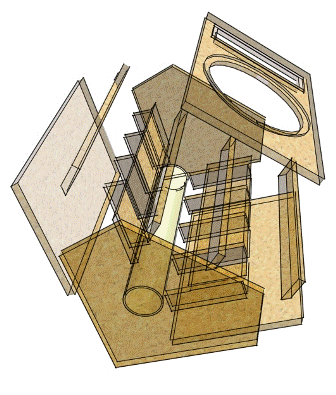
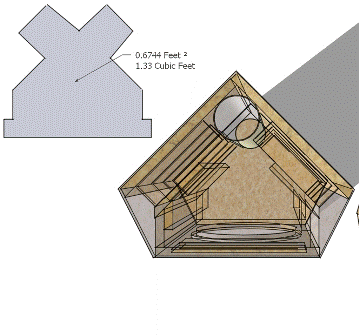
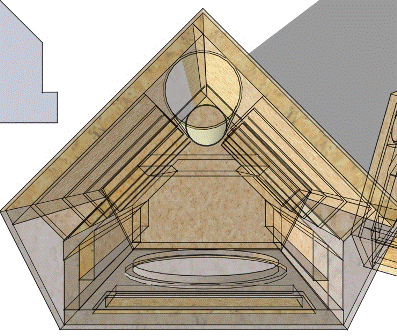
The ultra-flex design is optimized to get the back wave of the woofer out of the cabinet with great efficiency while offering excellent reflex loading to preserve power handling and ensure smooth response. The 4 inch PVC pipe at the rear acts as a wave guide transferring energy from the woofer to the ducts.
All of the angles in this box are 45 degrees making it a very simple enclosure to construct.
Although you're welcome to set this up with your own favorite combination of drivers, we've designed a kit that configures these cabinets as monitor speakers or stage monitors using the following high quality components.
Parts costs for a pair of speakers are just under $500.00
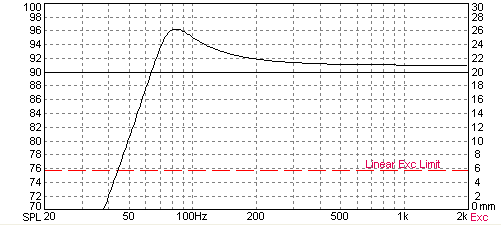
These components are available from Parts Express Using a 107dB tweeter in combination with the L-Pad, 18dB crossover slope and tungsten filaments ensure this setup will handle the full 600 watts it was designed for. Ideal for it's application, here is the low frequency response of this driver compliment at 1 watt/1 meter:
Notice that the peak at 80 Hz is 6dB giving the speaker warmth and great low end punch. The 60Hz figure is -4dB which will actually be referenced against the peak. This gives a total reduction of apparent 60 cycle hum from amplifiers of 10dB or half as much hum as most other speakers. A neat trick resulting from this woofer and cabinet combination. (Other woofers WILL vary).
Calculate your model based on 1.33 cubic feet for the woofer of your choice and create a tuning board for it! With the removable tuning board(s) you are able to cut a minimum 18 square inch slot of different widths to accommodate different tuning frequencies.
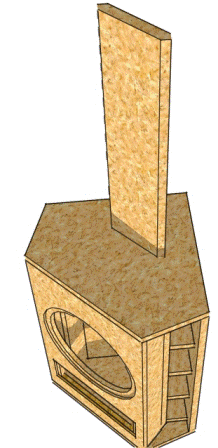
This makes it possible to fine tune your cabinet to a variety of woofers and or applications. The modeled response based on 1.33 cubic feet will vary in real life because the "port" will be firing into a secondary chamber. This will add significant gain to the porting frequency (and length to your calculated port) and alter the response enough that getting an accurate computer model is not likely to happen. That's okay, because published Thiel & Small parameters are never accurate. Unless you have a way to hand tune a cabinet to a specific woofer, your idea of a perfectly tuned computer modeled cabinet becomes a simple fantasy. The correct area to remove from the tuning board can be determined by ear by first sliding the solid board (as shown) down into the cabinet until it reaches a distance off the bottom where the cabinet becomes tuned. (Simply listen for the most bass). Note the position off the bottom and calculate the square inches of the opening. Now apply the area of that opening to a slot cut in the center of the tuning board and push it all the way into the cabinet.
ONLINE
PLANS ARE AVAILABLE FOR DOWNLOAD
Decware is a
trademark of High Fidelity
Engineering Co. |